Case Study / Technical SEO
ToolsGambling: 1000+ pages and technical SEO on Nuxt
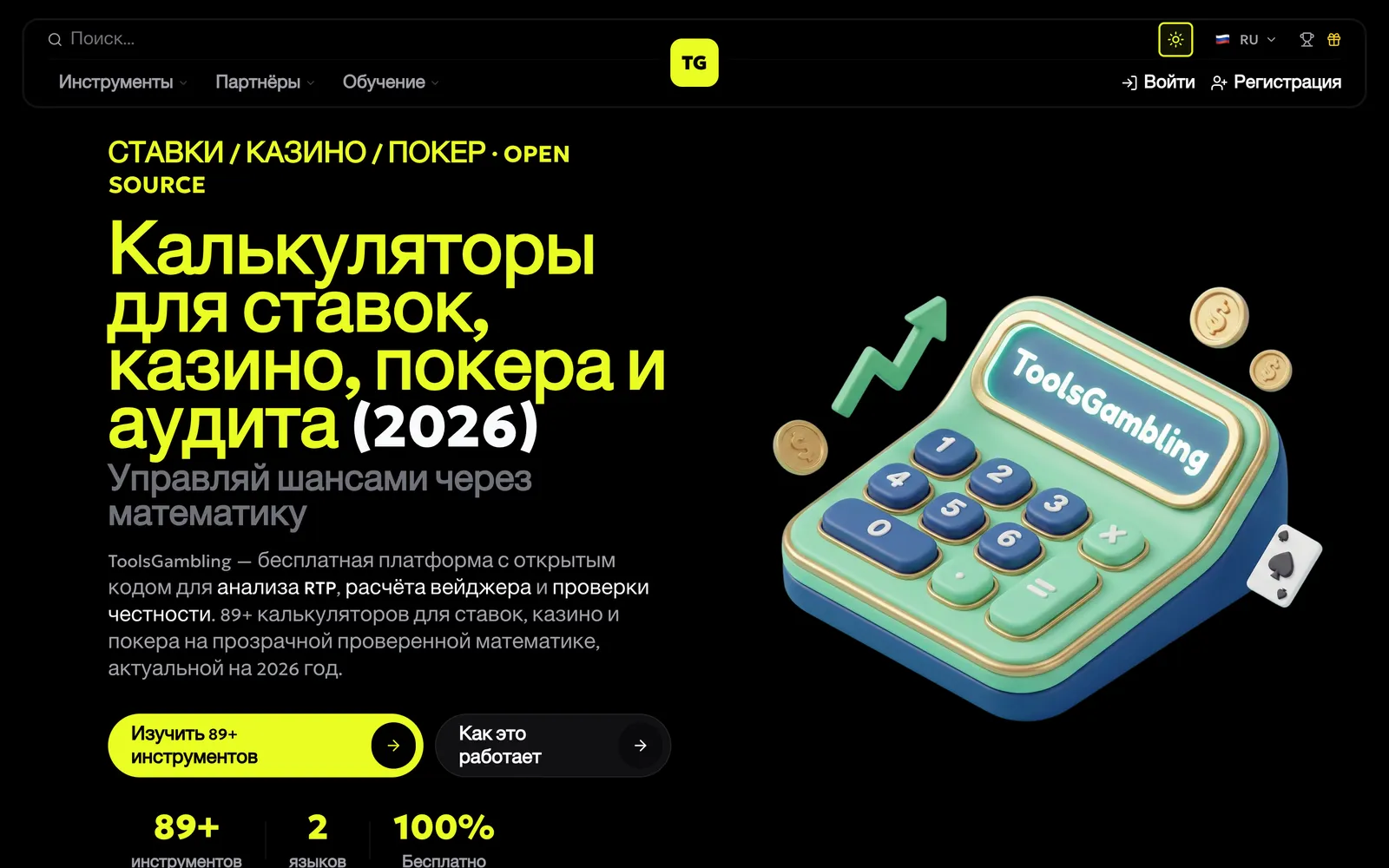
ToolsGambling is an international platform of interactive calculators: 89+ tools, two locales EN and RU, over a thousand pages of content. I run it as a fullstack developer and own the technical SEO end to end. Indexing architecture, performance, schema.org, sitemap, and real organic growth in YMYL, one of the hardest niches to rank in.
- Type
- Interactive calculator platform
- Scale
- 89+ tools, 1094 pages
- Locales
- EN and RU
- Authority
- DR 39, 278 referring domains
- Growth
- +47% monthly visitors
- From search
- ~1795 visits/month
What the project is
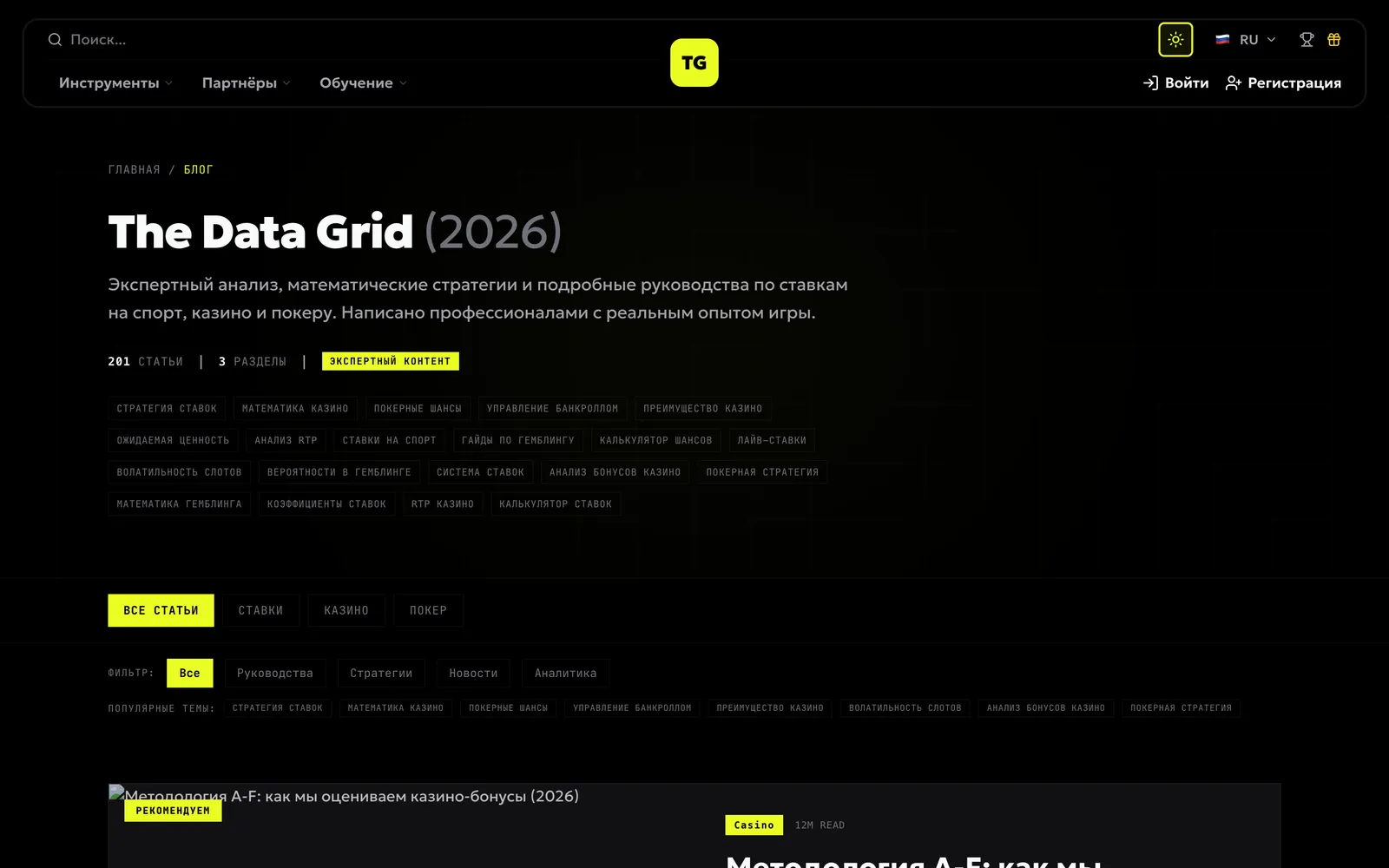
ToolsGambling is an international platform of interactive calculators and tools: calculations, audits, transparent math. It currently has 89+ tools and over a thousand pages of content in two languages, EN and RU. The audience is global, with the US as the primary market. Tool pages carry a "Developed by Evgeniy Volkov" credit. I run the project as a developer and own the technical side from architecture to deployment.
Scale and indexing
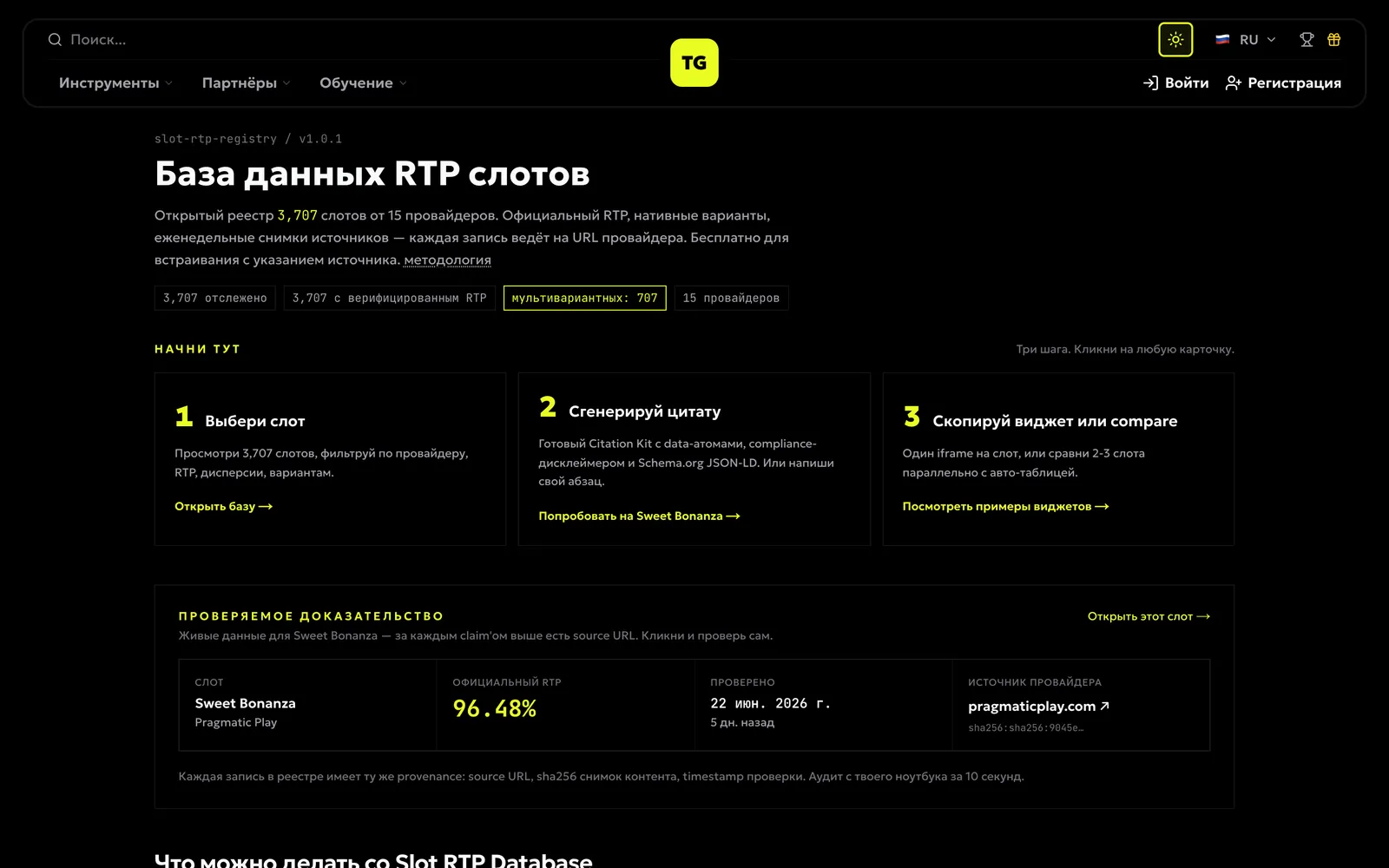
1094 pages across two locales puts real pressure on indexing. Every tool page follows the same structure: calculator, logic explanation, related tools, FAQ, and a facts block marked up with schema.org. I keep the JSON-LD, dynamic sitemap, canonical, and hreflang clean so search engines and AI answers see a clear structure. The project's database, for example, stores 3,707 RTP records across 15 providers, each traceable to its source and updated with weekly snapshots. That gives structured, citable data.
Performance and locale loading
The main engineering problem wasn't markup, it was speed. Locales had ballooned to megabytes, 275 translation files, and the app launched dead: server-side rendering was there, but clicking anything would hang for up to a minute. I rewrote the localization loading into a custom per-page architecture. A minimal core of around 115 KB loads immediately; the rest is fetched on demand for the specific route. Interactivity came back. Core Web Vitals straightened out. Without that, no amount of content would have helped: a slow page loses in search.
Results: organic growth and authority
Numbers for the month from Ahrefs and Yandex.Metrica. Domain Rating reached 39, which is solid for a young YMYL site. 278 referring domains and 441 backlinks. The platform started getting cited in AI search: answers in ChatGPT and Copilot. Yandex.Metrica shows around 2,510 visitors in the month, up 47% from the previous one. Roughly 1,795 of those visits came from search engines, organic, not social. Average time on site is around 10 minutes, with a depth of nearly 10 pages. I don't promise top rankings. I show the actual result and how it was built.
Why this is proof for technical SEO
YMYL and iGaming are among the hardest niches to rank in. That's exactly why this project honestly demonstrates the competence behind the technical SEO service. Indexing at scale across a thousand-plus pages, a performance-first architecture, clean schema, sitemap, canonical and hreflang, structure designed for AI answers. I bring the same approach to commercial sites where the technical foundation decides whether a page reaches the top or not.
Project stack
- Nuxt
- Vue 3
- TypeScript
- Tailwind CSS
- PrimeVue
- i18n EN/RU
- Supabase
- Stripe
- PWA
- schema.org
- Playwright
Questions about technical SEO for a large-scale site
How do you get a 1,000+ page site indexed?
It starts with a clean, predictable structure. ToolsGambling has 1,094 pages built on a single framework: every page has its own canonical, structured markup, and a place in the sitemap. A dynamic sitemap keeps the crawler's list current without any manual edits. From there, I watch the crawl budget closely: duplicates, junk parameters, and broken redirect chains all get cut so the bot spends its visits on pages that matter, not noise.
What does per-page locale loading actually do for performance?
This was the main engineering headache. Locales had grown to megabytes across 275 translation files, and the app launched dead: the render was there, but clicks didn't respond for up to a minute. I rewrote the loading to a per-page architecture. The core bundle, around 115 KB, loads immediately; everything else is pulled in for the specific route. Interactivity came back, and Core Web Vitals recovered. A slow page loses in search rankings, even with perfect content.
How do you manage schema.org and a dynamic sitemap at scale?
You can't hand-mark up a thousand pages. I generate schema.org markup and the sitemap from data: each tool page produces its own JSON-LD based on its type, and the sitemap is built from the actual route list. When content changes, the markup and sitemap update without me touching anything. That keeps the structure clean at any volume, and search engines plus AI overviews see clear, coherent entities instead of a mess.
How do you keep Core Web Vitals healthy on a large site?
Good metrics come from the architecture, not a one-off optimization. On ToolsGambling that means per-page locale loading, image optimization via Nuxt Image and sharp, and incremental static generation with caching. The slow startup problem I already described was the first thing I fixed. After that, I keep an eye on new pages to make sure they don't pull in unnecessary JS. Strong Vitals aren't a finish line. They're the baseline the site runs at all the time.
How do you handle EN and RU without duplicates, hreflang, and canonical issues?
Two locales generate duplicates fast if you don't set up the right connections. On ToolsGambling, EN and RU are separated through hreflang and canonical: each language version knows its counterpart, so the search engine doesn't confuse them or treat one as a copy. The URL structure is predictable, and switching languages doesn't break indexing. Without that setup, an international site starts competing against itself and both versions sink.
What matters most for international technical SEO?
It's the technical setup that decides, not just the content. hreflang, correct canonicals, speed across different markets, one clean structure for all languages. ToolsGambling's audience is global, with the US as the primary market, so pages need to open and get indexed at the same speed everywhere. Content matters, but if the crawler trips over technical issues, it never even gets to the content.
Can technical SEO actually work in a tough niche like YMYL?
ToolsGambling operates in YMYL and iGaming, one of the hardest niches to rank in. Over one month, per Ahrefs and Yandex Metrica: DR grew to 39, 278 referring domains, visitor growth up 47%, around 1,795 visits from search. ChatGPT and Copilot started citing the platform. I don't promise top rankings on principle. I show actual results and the engineering behind them.